Ancient Cities
The Cultural Triangle
Ancient capitals, rock fortresses and 2,000 years of history.


Beaches, wildlife, tea country and ancient cities — one small island, a whole world of travel
Sri Lanka is a small island with a very big variety. In a single week you can climb an ancient rock fortress, watch elephants in the wild, ride a train through tea country, and swim on a palm-fringed beach — all without a single internal flight. The island holds eight UNESCO World Heritage Sites, fifteen national parks, and tea estates that have made Ceylon tea famous around the world. This page is a first-time visitor’s map of the island: five regions, what makes each one special, and when to go.
Ancient capitals, rock fortresses and 2,000 years of history.

Misty tea estates, cool air and the world's most beautiful train ride.

Golden beaches, whale watching and the walled city of Galle.
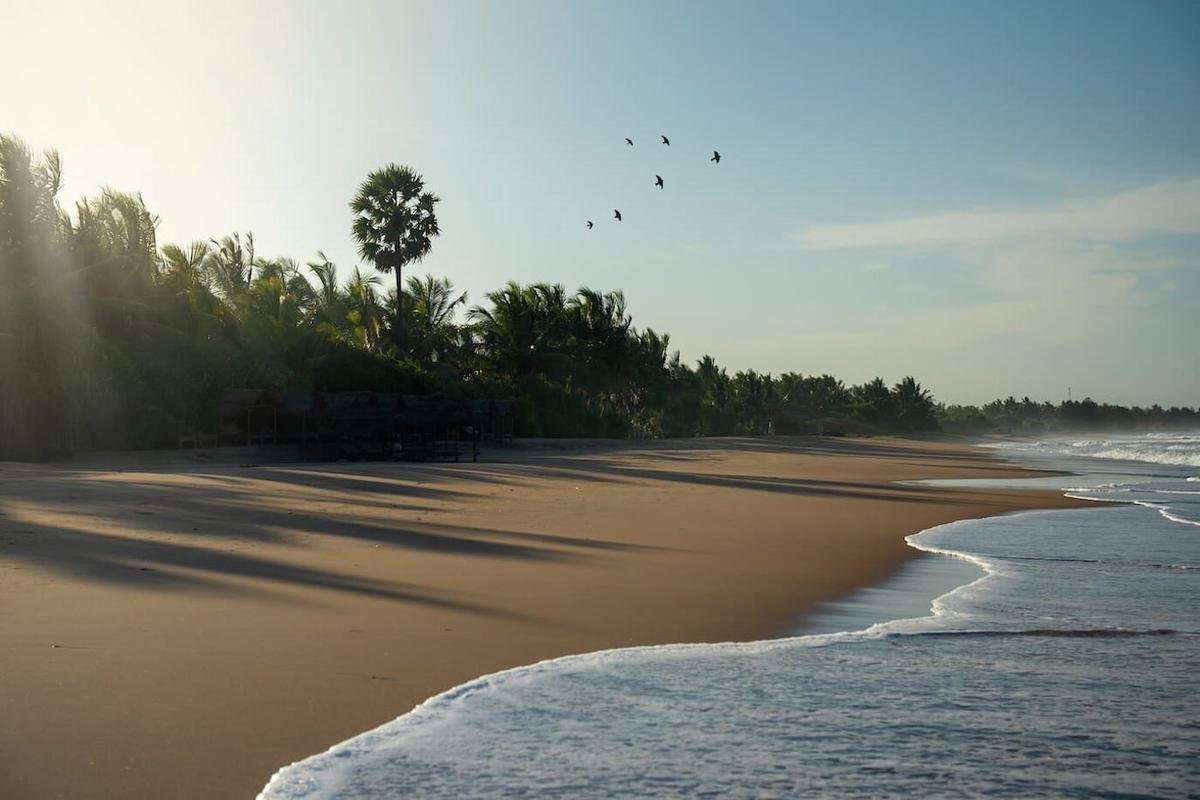
Calm bays, surf and temples — the island's sunny side, April to September.

A different Sri Lanka: Tamil culture, temples and island day trips.
Some places in Sri Lanka stay with you long after the trip ends. These are the ones our guests talk about most — the ancient, the wild and the beautiful, all within one small island.
Climb the great rock of a 5th-century king: ancient frescoes, the giant lion paws, and a view from the top that stretches across the whole Cultural Triangle. It is the single most unforgettable climb in Sri Lanka.
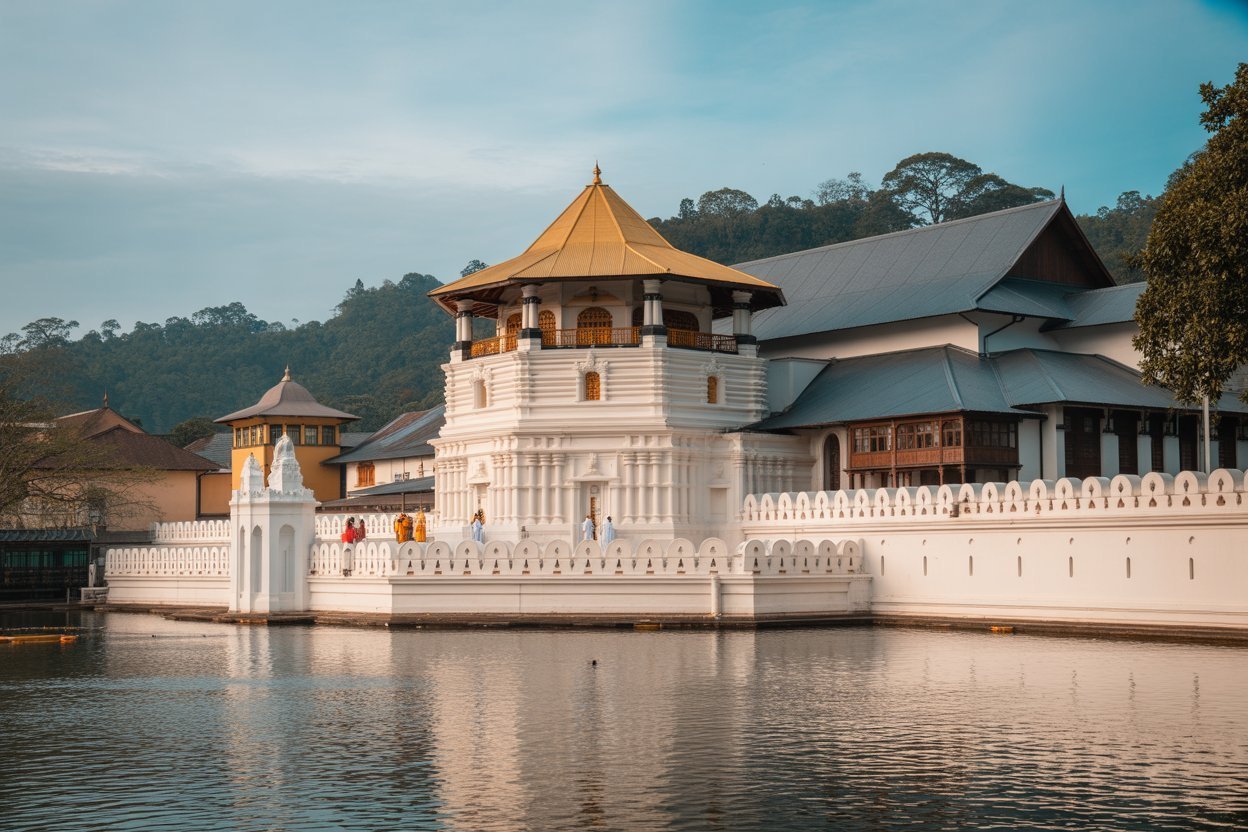
View tours →The Cultural Triangle is the ancient heart of the island. Here, in the dry north-central plains, stand the first capitals of Sri Lanka: Anuradhapura, with its white dagobas and a sacred fig tree said to be grown from a cutting of the tree under which the Buddha found enlightenment, and Polonnaruwa, the medieval capital of kings and stone carvers. Between them rises Sigiriya, the great rock fortress with its frescoes and lion paws, and the cave temples of Dambulla. Two or three days here is the best history lesson in the country — and the sunsets over the reservoirs are unforgettable. Read our guides to Sigiriya and Anuradhapura.
Up in the central highlands the air turns cool and the hills turn green with tea. Nuwara Eliya, the old colonial hill station the British called Little England, sits among the estates at nearly 2,000 metres, and the train from Kandy to Ella is one of the most beautiful rail journeys in the world — misty mornings, waterfalls, and the Nine Arch Bridge. Ella itself is the island’s favourite hill town: small, relaxed, and ringed by walks to Little Adam’s Peak and the Ravana Falls. Come for the views, stay for the slow pace. Read our guide to Nuwara Eliya.
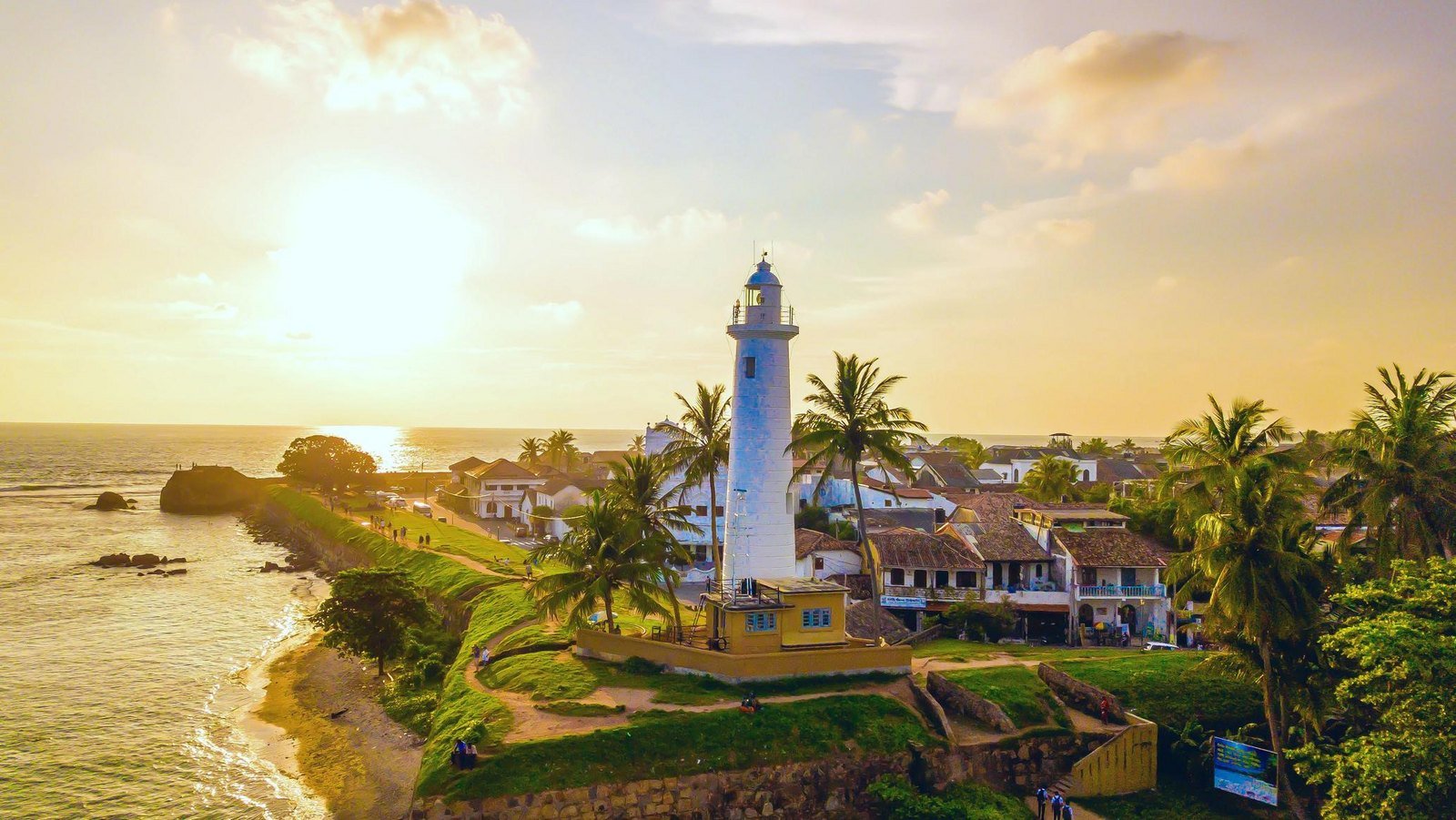
The south coast is Sri Lanka at its most relaxed: golden beaches, fishing villages, and the walled city of Galle. Galle Fort, built by the Dutch in the 1600s, is still a living town of cafés, shops and lighthouses inside its old ramparts — best at sunset. Further east, Mirissa is the place for blue whale watching from November to April, and for the famous Coconut Tree Hill at sunset. Between them lie Unawatuna, Weligama and Tangalle, each with its own beach and its own pace. Read our guides to Galle and Mirissa.
The east coast is the island’s quieter side, and the best place to be from April to September, when the west coast is wet. Trincomalee has one of the world’s great natural harbours, the clifftop Koneswaram Temple, and calm bays for swimming and snorkelling. Further south, Arugam Bay is Sri Lanka’s surf capital, and the beaches around Pasikuda are the calmest on the island. If you travel in the middle of the year, start here. Read our guide to Trincomalee.
The north is the least-visited part of Sri Lanka, and the most different. Jaffna, the Tamil cultural capital, has its own language, food and temples: the great Nallur Kandaswamy Kovil, busy markets, and some of the best food on the island. The islands off the coast — Delft, with its wild horses, and Nagadeepa, with its Buddhist and Hindu shrines — make a fascinating day trip. The north rewards travellers who like to go beyond the usual route. See our tour packages that visit the north.
Sri Lanka has two monsoons and two coasts, so there is always a dry side. The south and west coasts — Galle, Mirissa, Bentota, Colombo — are at their best from November to April. The ancient cities and the east coast — Sigiriya, Trincomalee, Arugam Bay — are best from April to September. The highlands are clearest from January to April. In short, there is no bad month to visit Sri Lanka — only a better coast for the month you choose. Read our month-by-month guide: Best Time to Visit Sri Lanka.

Galle, Mirissa, Bentota and Colombo at their best.

Trincomalee, Arugam Bay and Sigiriya in the dry season.

The clearest skies over the tea estates.

Sri Lanka is one of the best places in Asia to see wildlife. Yala National Park has one of the highest leopard densities in the world, Udawalawe almost guarantees elephants, and Minneriya hosts the famous Gathering, when hundreds of elephants come to the reservoir in the dry season. Wilpattu, the island’s largest park, is quieter and wilder. Add a safari to any tour — half a day is enough for most travellers.
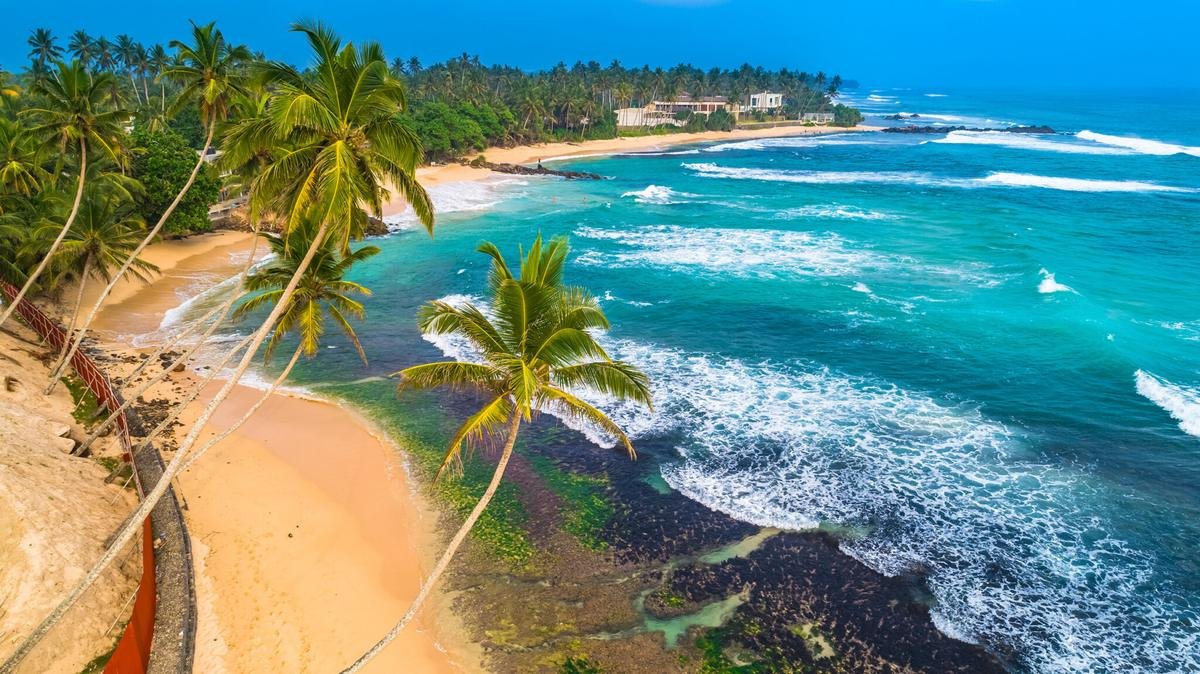
With more than a thousand kilometres of coastline, Sri Lanka is a beach island first and foremost. The south coast has the palm-fringed bays and whale watching, the west coast has the long golden sands around Negombo and Bentota, and the east coast has the calmest water for swimming. Pick your coast by the season, and the beach will take care of the rest.
Thank you!
Opening WhatsApp with your enquiry…
Opening your email…
Your email app should open with our address filled in and your enquiry ready to write. If it doesn't open, please email us at tropicaltreasurestours@outlook.com